← back
interaction'25–'26shipped

Ask Alteryx

Ask Alteryx: one AI assistant for a whole analytics platform, piloted in Designer Desktop and built to work across all of Alteryx One.

Ask Alteryx
role

Lead Designer · Consultant, Endava

team

Endava consultant, embedded in Alteryx's product team for 12 months

shipped

2025–26

overview

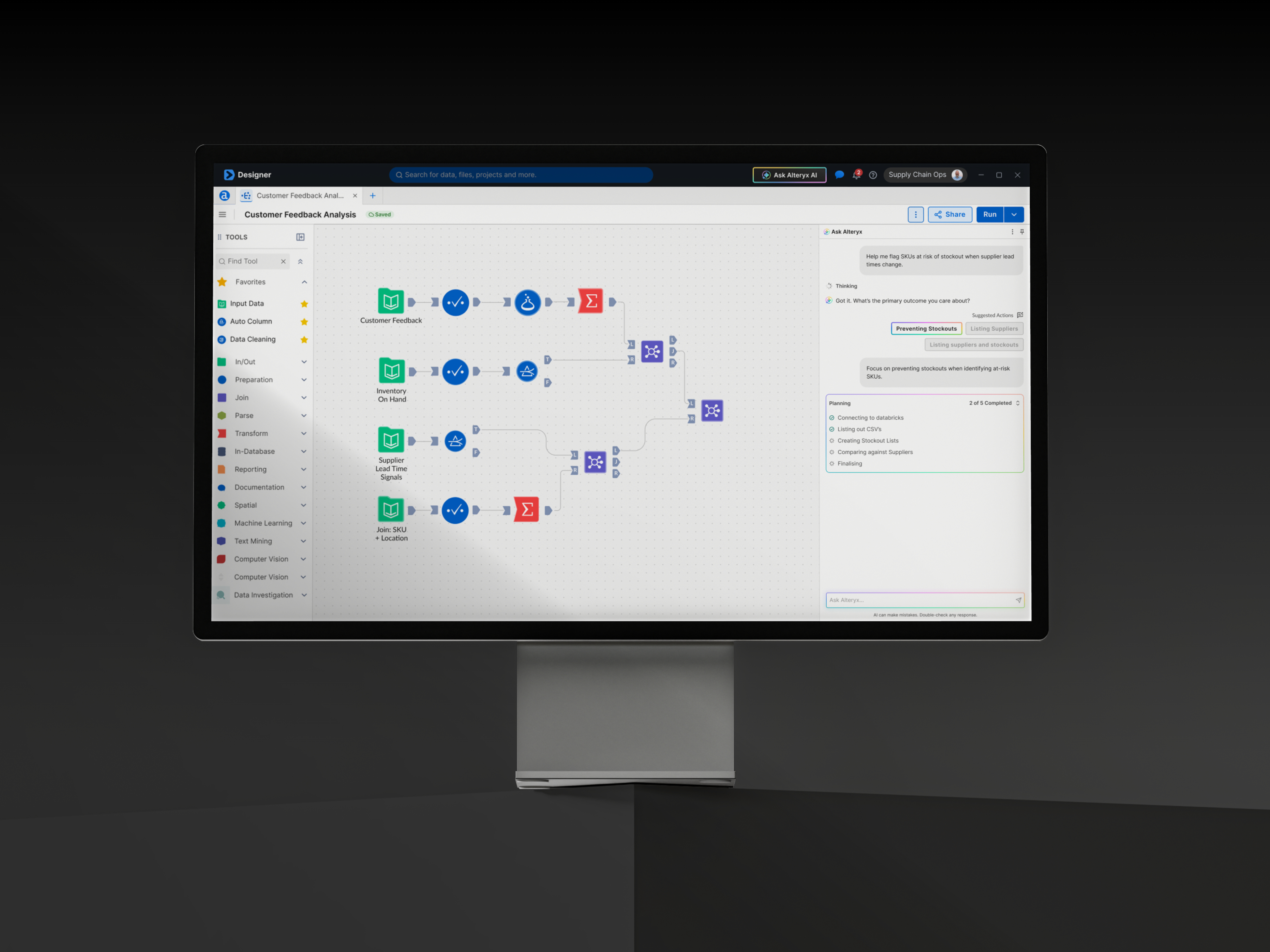
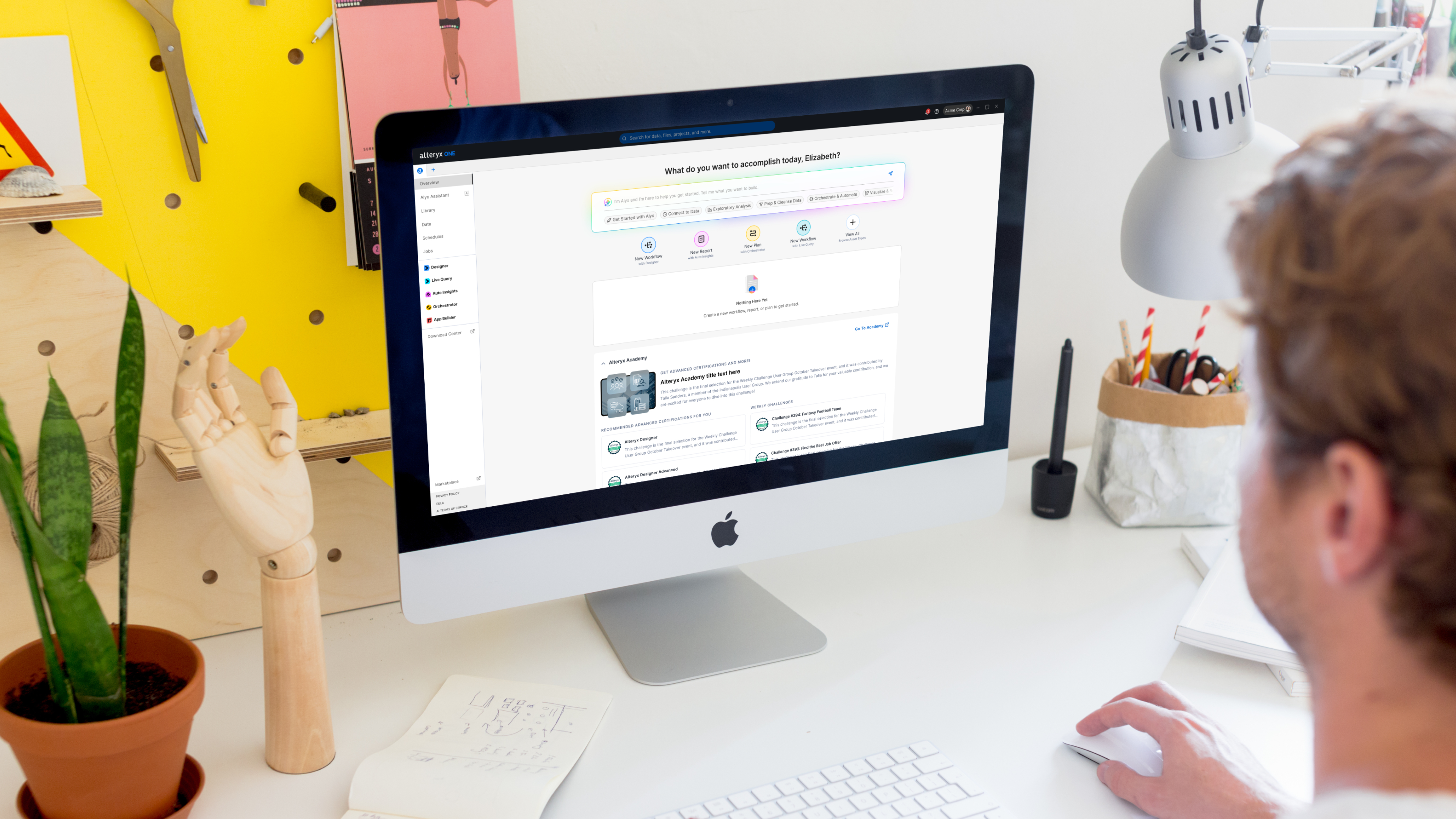
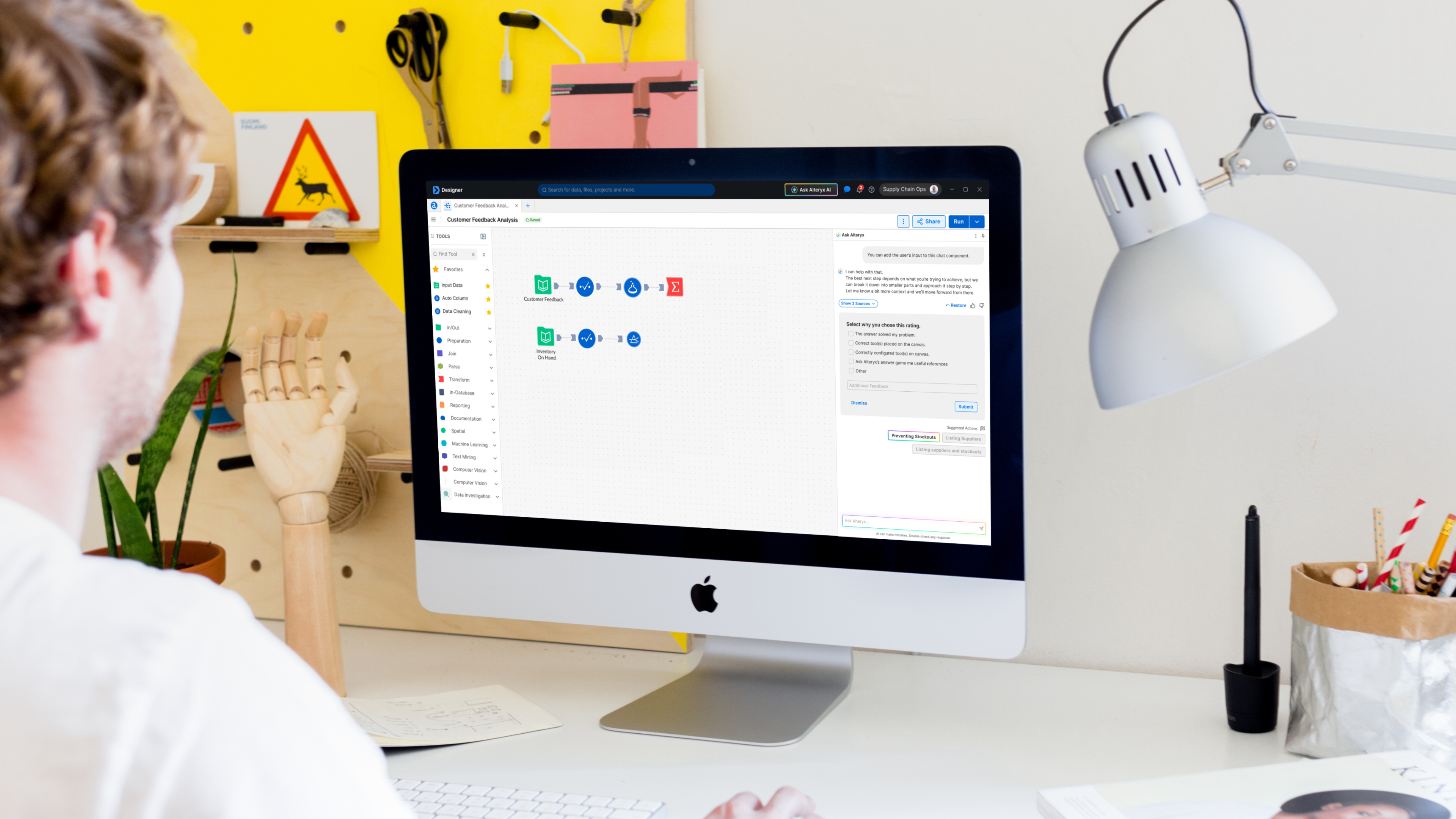
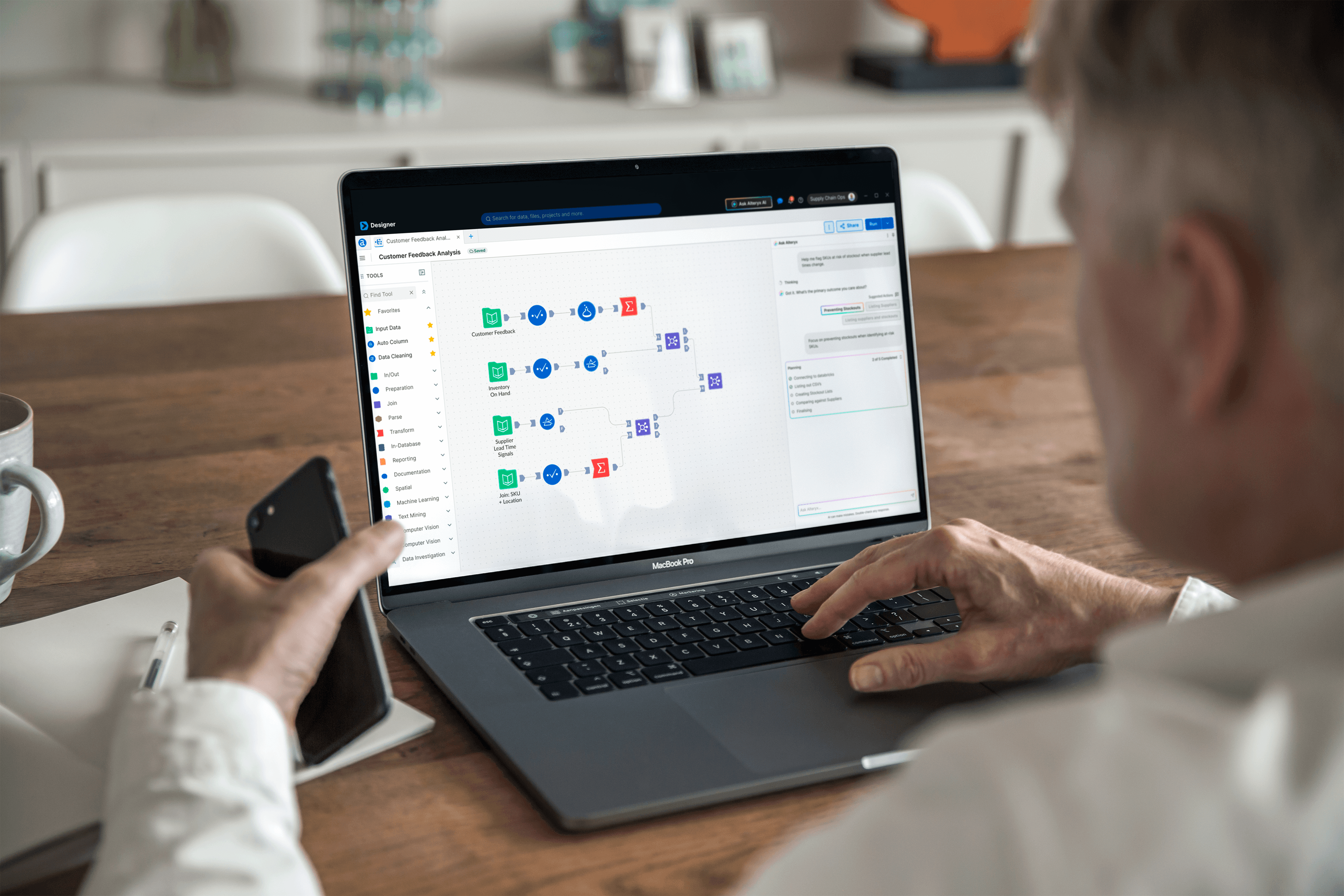
Alteryx One is an analytics platform made up of several products: Designer for building data workflows on the desktop, Designer Cloud in the browser, and Auto Insights for exploring the results. Each had grown up on its own, but AI needed to show up the same way in all of them. The answer was Ask Alteryx, a single conversational assistant designed as a chat panel that sits beside the work rather than replacing it. People ask a question or describe a goal in plain language, and the assistant suggests the next tool, places and configures it on the canvas, summarises complex workflows, and helps troubleshoot when something breaks. Its decisions came from what customers were actually asking for, and its design system wasn't tied to any one product. Piloted in Designer Desktop, foundational to the rest of Alteryx One.

approach
01
discovery

Built on what customers asked for

Decisions started from evidence, not guesses. Beta data and metrics showed how people already used AI in the product, and customer feature requests showed what they wished it did. Interviews filled in the why, and the requests became the roadmap.

user interviewsbeta data analysisfeature request mappingprioritisation
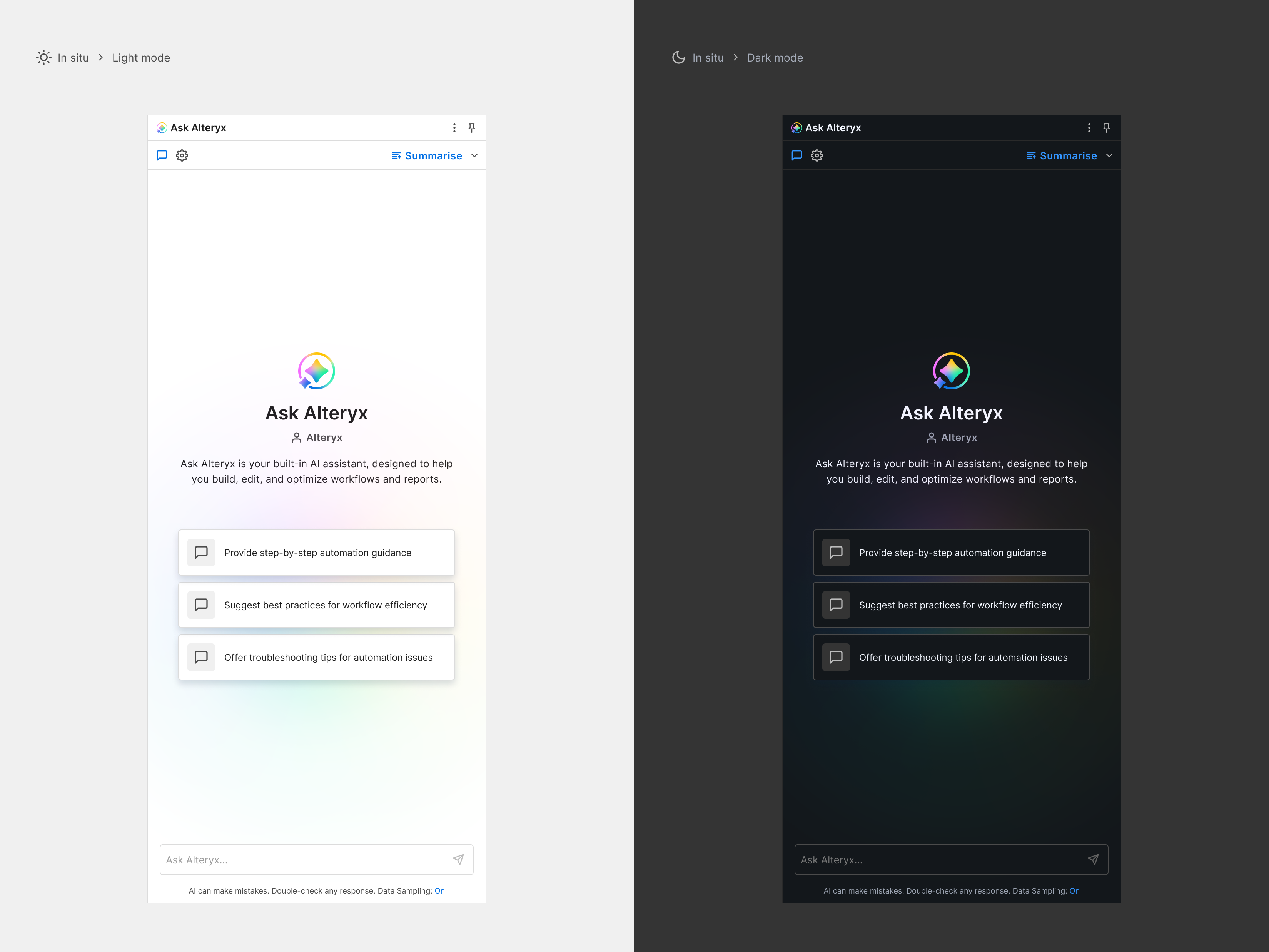
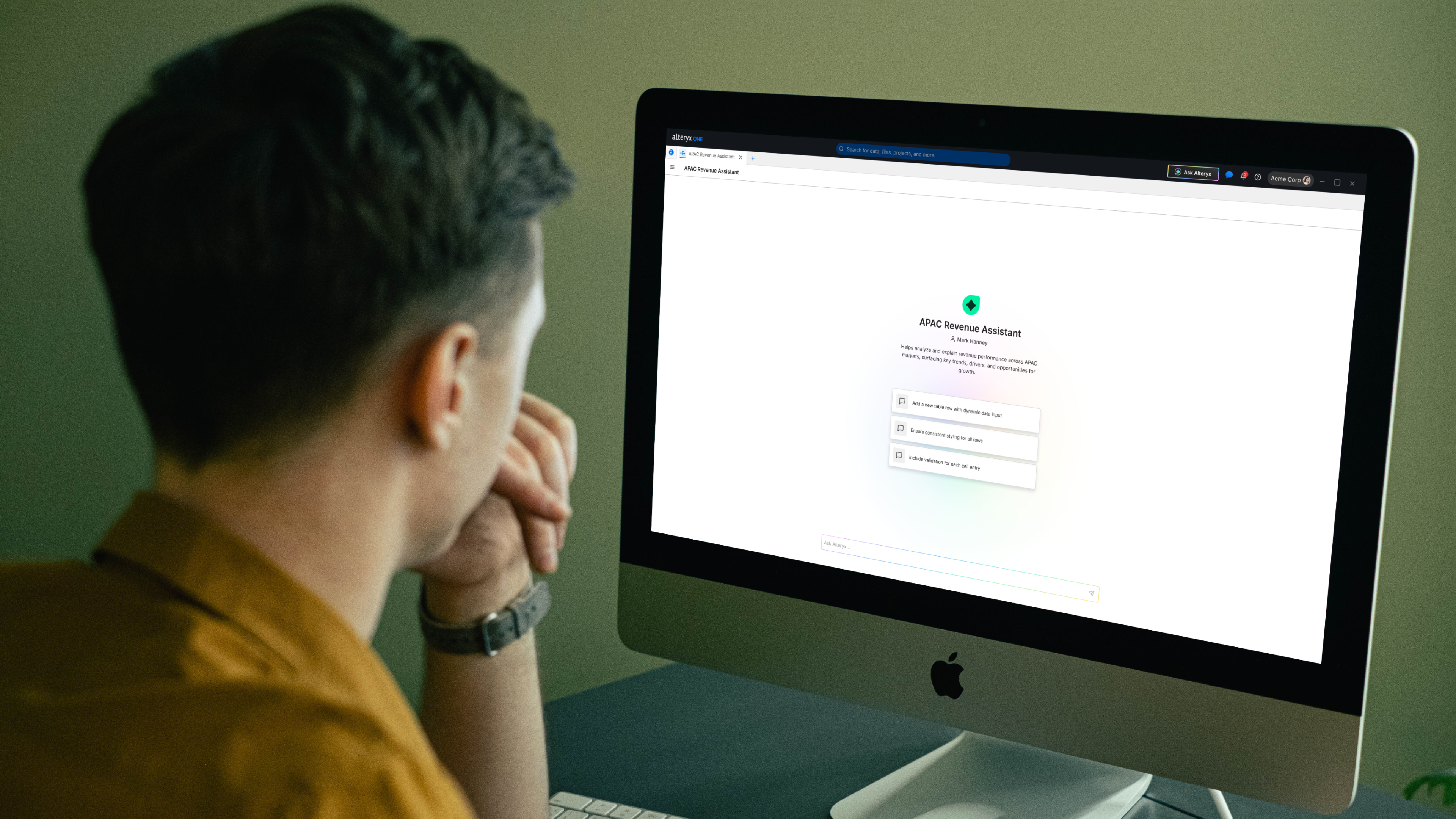
Ask Alteryx welcome screen with suggested prompts, light and dark mode
02
Conversation design

Designing what it says, not just how it looks

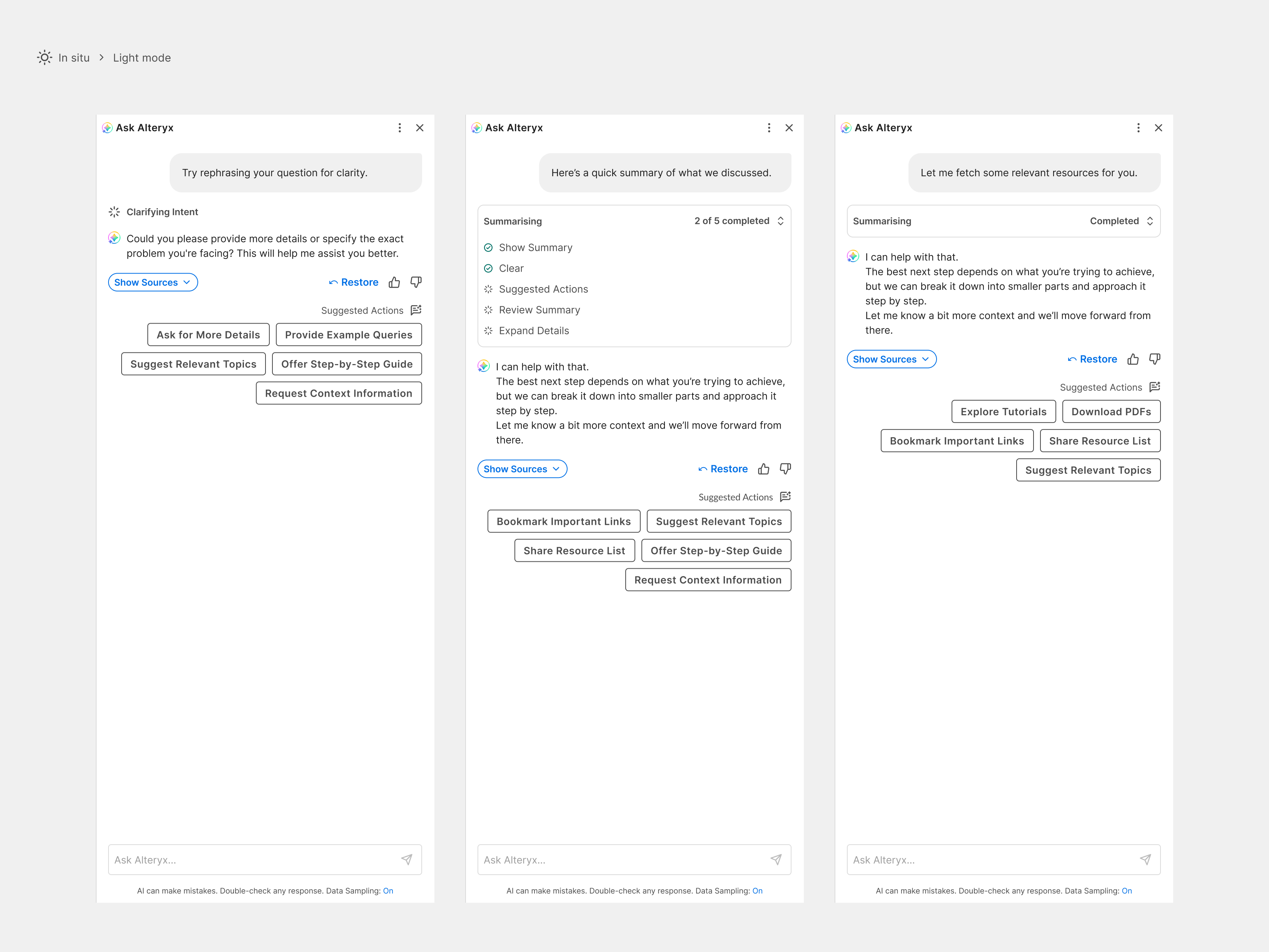
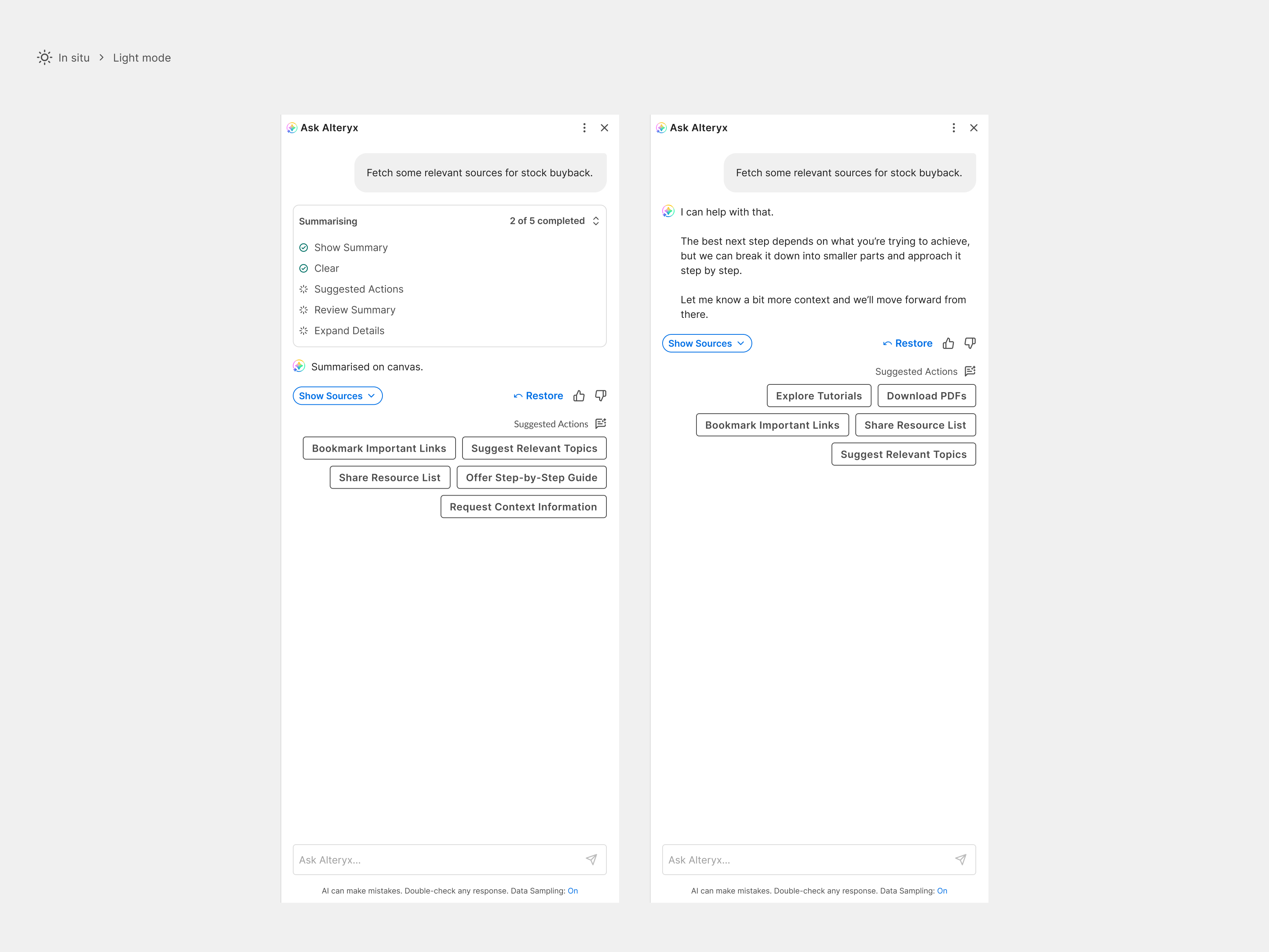
The conversation was designed before the interface, with the prompts written alongside engineering. Every answer was shaped into a small, useful moment, a suggestion, an explanation, a tool placed on the canvas, so a response always led somewhere.

prompt design with engineeringintent mappingresponse patternserror & fallback states
Ask Alteryx conversation states with the planning panel
03
Lean by design

Smarter, not bigger

Early token usage was high. Teaching the assistant Alteryx’s own tools meant it needed less context, and only workflow structure and metadata reached the model. Alteryx’s benchmarks back the approach: up to 93% fewer tokens and 85% faster answers.

token optimisationprompt refinementcontext design
Smarter
04
Agent chat design system

A panel that travels

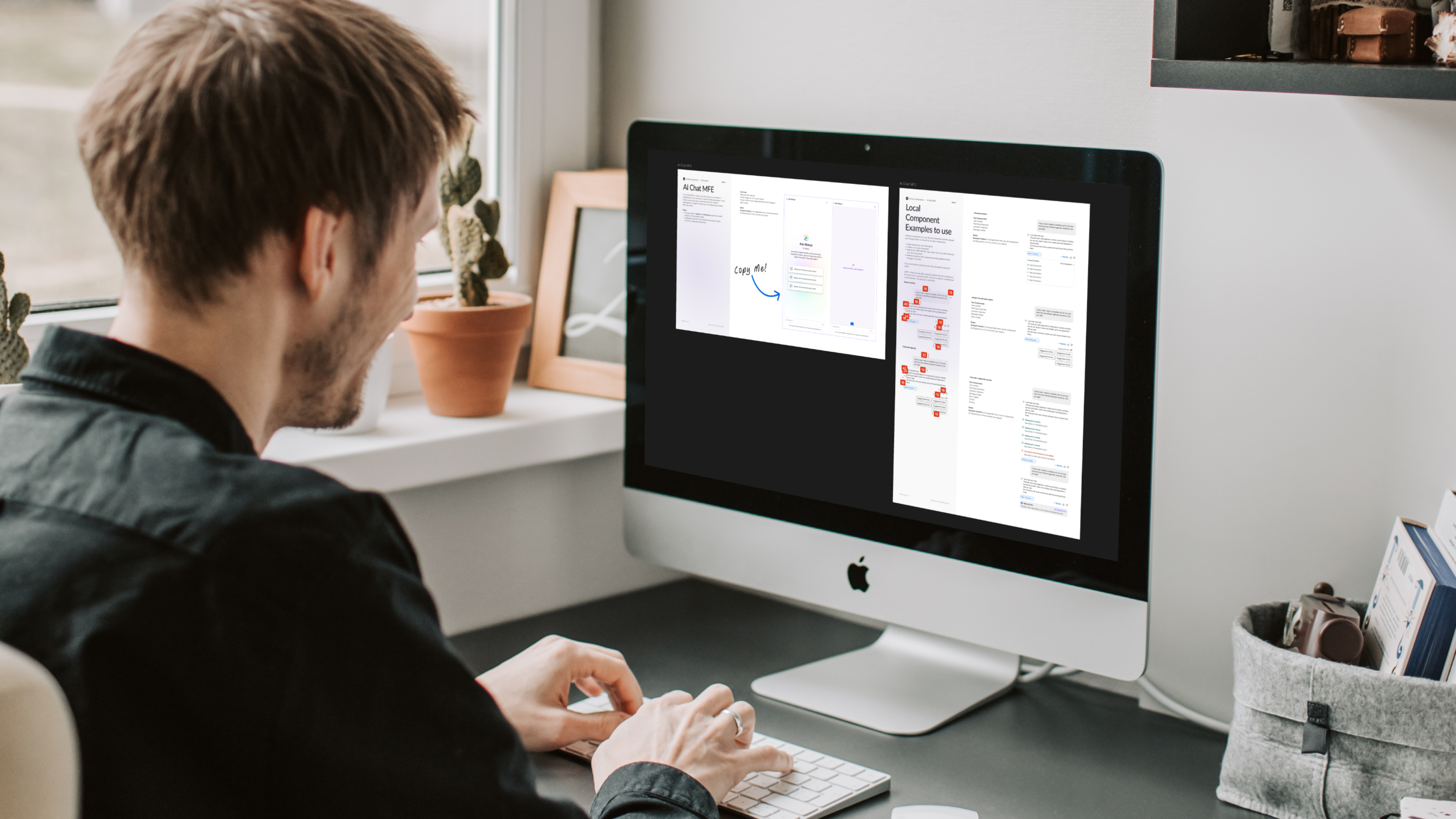
Built as a micro-frontend: one self-contained panel any Alteryx One app can host, with a component library of its own. Shell, content and behaviours were all documented in light and dark mode, with accessibility in from the start.

component architecturelight & dark themingbehaviour specsdocumentation & dev handoff
The Ask Alteryx component library overview
05
AI presence

Showing when AI is at work

Components already had hover, active and disabled states, but nothing said when AI was available, working, had contributed or could explain itself. AI states layered on top gave Alteryx One one consistent signal for each.

AI interaction statesvisual & motion signallingcross-product consistencydesign deep dive
06
Pilot to platform

Proved in Designer, ready for Alteryx One

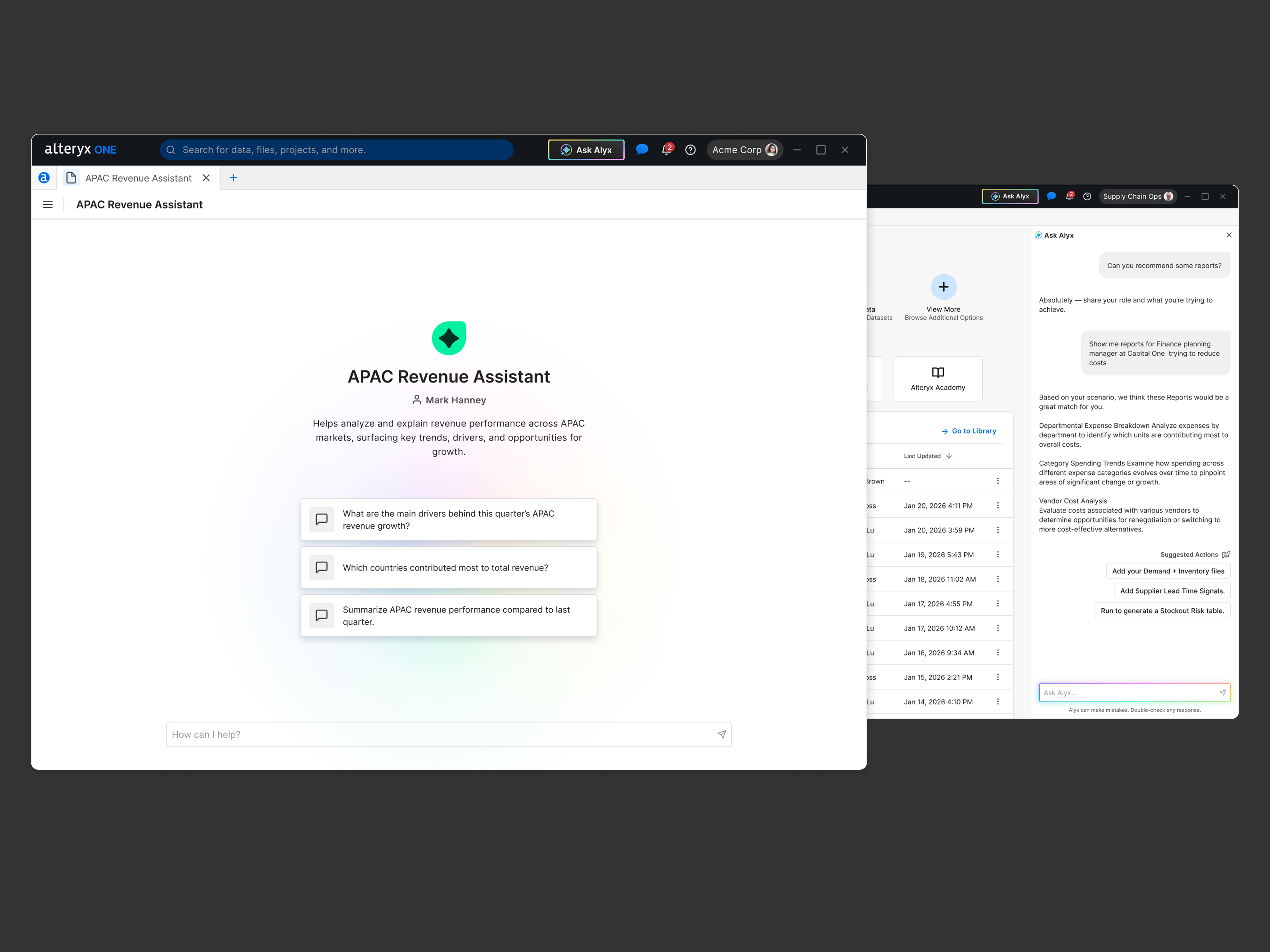
Launched first in Designer Desktop, with trust built in: sources on every answer, canvas changes that can be restored, and clear data controls. When Designer moved under Alteryx One, the same panel shipped across the platform.

high-fidelity UIprototypingdesign QAcross-product patterns
Ask Alteryx overlaying an Alteryx One app on a narrower screen
tl;dr

Ask Alteryx: one conversational assistant for a whole analytics platform, shaped by what customers asked for, kept lean on tokens, and built on its own design system. Piloted in Designer Desktop, foundational to Alteryx One.

93%
fewer tokens with workflow-grounded AI (Alteryx benchmark)
85%
faster answers than an LLM alone (Alteryx benchmark)
The design challenge

Making AI feel native in several products that each look and work differently.

The evidence

Beta data, metrics and customer feature requests decided what the assistant did first.

The conversation

Prompts designed hand in hand with engineering, with token usage brought down so it stays affordable at scale.

The system

A micro-frontend chat panel with its own component library, themed for light and dark, built to sit inside any Alteryx One app.

now, with ai

What i'd do differently now

Designing for AI with mostly static tools meant guessing how real answers would feel. Today, the model can be part of the design process itself.

prototyping conversations

thenStatic screens of ideal, hand-written responses.

nowLive prototypes calling a real model, so the design is tested against what the assistant actually says.

conversation testing

thenReviewing sample prompts and replies by hand.

nowSets of real customer prompts run against each change, to catch bad answers and token spikes before release.

design system to code

thenComponents rebuilt and checked by hand in every product.

nowThe system as structured tokens and specs an agent can read and apply in each product, with design QA done in parallel.

next project
TenSevenSeven↘